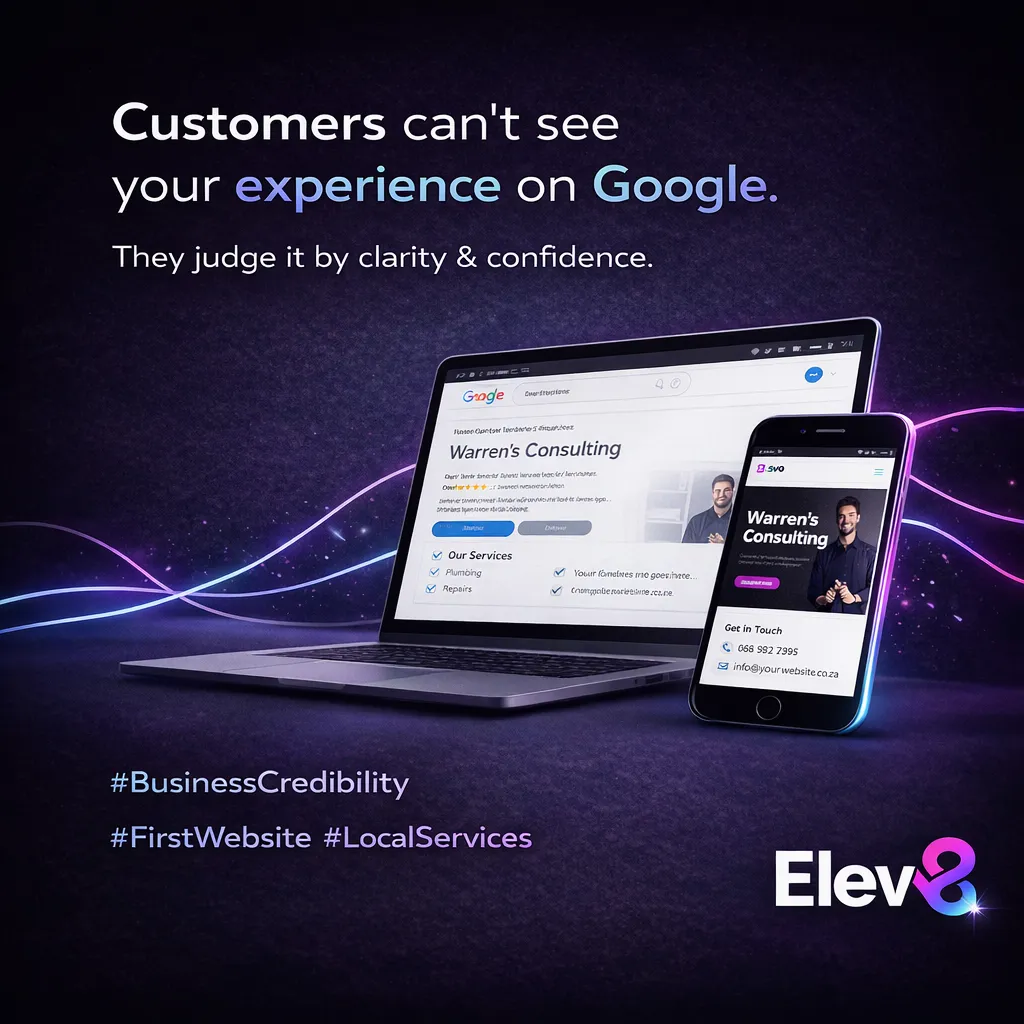
Why Customers Trust Businesses With Websites More Than Social Pages
Many small business owners rely primarily on social media pages to represent their business online. Platforms like Facebook and Instagram feel accessible, familiar, and easy to manage. Yet customers consistently place more trust in businesses that have a proper website, even when social pages are active and well-maintained.
This difference in trust is not about design trends or technology. It is about how customers assess legitimacy, reliability, and stability when deciding who to contact or buy from. This article explains why websites create more trust than social pages, how customers evaluate credibility online, and what this means for small businesses in South Africa.
How Customers Assess Trust Online
When potential customers look up a business, they are usually trying to reduce uncertainty. They want to confirm:
That the business is real
That it is established
That it is easy to contact
That it will still exist after the transaction
Trust is built through signals that answer these concerns clearly and consistently.
Social Pages Feel Temporary to Customers
Social media platforms are designed for ongoing content, not long-term credibility.
From a customer’s perspective:
Social pages can be created or deleted quickly
Business details often change or are incomplete
Posts may focus on promotion rather than explanation
Even when a social page looks active, it does not always communicate stability. Customers know that social platforms prioritise trends, algorithms, and short attention cycles.
This does not mean social media lacks value. It means it serves a different role than a website.
Websites Signal Commitment and Investment
A website sends a different message.
Customers tend to associate websites with:
Intentional effort
Financial investment
Long-term planning
Registering a domain, setting up hosting, and maintaining a website suggests that a business is serious about its presence. This perceived commitment increases confidence, even before a visitor reads the content.
Owning a domain and professional email address further reinforces this signal.
Websites Provide Structured Information
Websites allow businesses to present information in a clear, logical structure.
This includes:
Dedicated service pages
An About page explaining who runs the business
A Contact page with consistent details
Clear explanations of how the business operates
Social pages often mix business information with posts, comments, and updates, making it harder for customers to find answers quickly.
Clear structure is a key principle of strong Website Basics, especially for first-time websites.
Control and Consistency Matter
With a website, the business controls:
Layout
Messaging
Information hierarchy
What visitors see first
On social platforms:
Algorithms decide what is shown
Important details may be hidden
Older posts disappear quickly
Customers trust businesses more when information is stable and predictable. Websites provide that stability.
Websites Support Deeper Evaluation
For higher-value services, customers rarely make decisions based on a single page or post.
They often want to:
Read detailed service explanations
Understand experience and background
Compare offerings thoughtfully
Websites support this deeper evaluation process. Social pages are better suited to awareness and updates, not careful decision-making.
This is why websites play an important role alongside Google visibility and local discovery
Perceived Professionalism and Legitimacy
Whether consciously or not, customers associate websites with professionalism.
This includes:
A custom domain
Consistent branding
Clear navigation
Dedicated business information
Even a simple website often appears more legitimate than a busy social page because it feels purpose-built rather than platform-dependent.
Examples of clean, structured business websites can be seen in Elev8’s portfolio.
Social Pages Still Matter, But Differently
Social media is valuable for:
Engagement
Updates
Visibility
Community interaction
However, social pages are most effective when they support a central website rather than replace it.
Many customers discover a business on social media and then look for a website to confirm legitimacy before making contact.
Trust and Google Visibility Are Linked
Google also treats websites and social pages differently.
Websites allow Google to:
Crawl and index structured content
Understand services and locations clearly
Build long-term trust signals
Social pages may appear in search results, but they do not provide the same foundation for sustainable visibility.
This is why businesses that rely only on social media often struggle to grow beyond word-of-mouth and platform-driven exposure.
Common Misconceptions
“My social page is enough for now”
Social pages may work initially, but trust limits are often reached as the business grows.
“Websites are only for big businesses”
Customers do not expect complex websites. They expect clarity and legitimacy.
“My customers are already on social media”
Customers may discover you there, but many still want confirmation elsewhere.
Conclusion
Customers trust businesses with websites more than social pages because websites signal stability, commitment, and clarity. They provide structured information, consistent messaging, and a sense of permanence that social platforms cannot offer on their own.
For small businesses, a website does not replace social media. It anchors it. Together, they create a more trustworthy and reliable online presence that supports both customer confidence and long-term Google visibility.
